Why should a beginner maintain their body weight?
Maintaining weight is an important step that reoccurs throughout every fitness journey. It allows individuals to learn or reassess the amount of energy they expend on an average day and how much food they need to consume. This identifies an individual’s maintenance calories and total daily energy expenditure. When exercising consistently and maintaining weight, beginners can lose body fat and build lean muscle at the same time. This is the highly desired body re-composition that many gym-goers dream of. As an individual becomes more experienced, the rate of body re-composition slows.
What is a maintenance phase?
A maintenance phase is an extended period of time where the focus is maintaining a set bodyweight, rather than gaining or losing weight. This is accomplished by matching the calories consumed with the calories expended, A.K.A. calories in = calories out. The bodyweight may drift upwards and downwards throughout this period, and that is perfectly okay. Ideally, the goal should be to hold the bodyweight at plus or minus 2 to 3 percent of the set point. This generally will last anywhere from a couple of weeks to years.
A maintenance phase is significantly more sustainable than a cutting phase. During all phases, an individual should strive to consistently adhere to their plan. However, during maintenance the individual is allowed more wiggle room, as they plan to consume slightly more calories than during a cut, thus allowing more room for some highly palatable food throughout the week.
How can a beginner utilize a maintenance phase?
To maintain bodyweight, it is necessary to have an understanding of energy expenditure and energy intake.
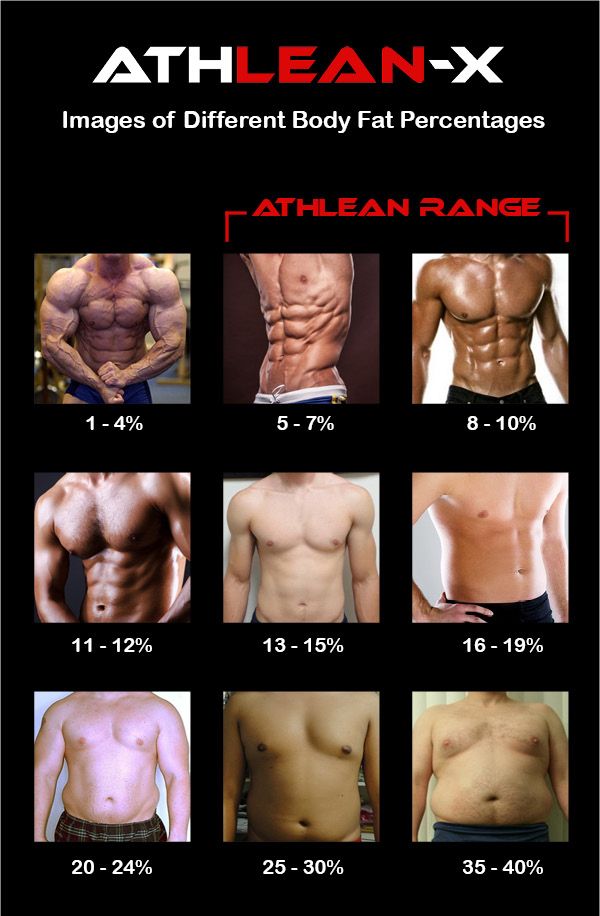
The first step is to estimate the daily energy expenditure. I recommend using Legion Athletics’ calculator https://legionathletics.com/tools/bmr-calculator/. I prefer using the Katch-McArdle formula, listed under “BMR formula”, as this calculator uses your gender, weight, height, age, activity level, and body fat percentage to estimate your daily energy expenditure. To determine your activity level, I only consider regular daily activity, like work. I personally work a desk job, so I select “None (little to no physical activity)”. However, someone who stands all day, like a cook, cashier, or nurse, would choose “A little activity”, someone who walks all day like a mail carrier or dog walker would choose “Some activity”, and someone working a labor-intensive job, like construction, would select either “A lot of activity” or “A TON of activity”. Your body fat percentage can be estimated by using reference images like this one from Athlean-X, https://athleanx.com/wp-content/uploads/2013/05/Images-Photos-of-Different-Body-Fat-Percentages.jpg, or Legion Athletics, https://legionathletics.com/wp-content/uploads/2020/06/Female-Body-Fat-Percentage-Pictures.png. These images are not the most precise estimates for body fat, but they are surprisingly accurate and the most efficient tool at doing so. Using my information, the calculator estimates a basal metabolic rate of about 1600 calories and a daily energy expenditure of about 1850 calories.
The next step is to track daily exercise, in excess of the normal activity already accounted for. I recommend using the app/website MyFitnessPal to track exercise and nutrition. It isn’t perfect, but it is adequate. Here, I track the type and duration of exercise, which for me is generally strength training, running, cycling, or hiking. It should be noted that nearly every app, fitness watch, and fitness equipment will overestimate the energy expended. To account for this, I always reduce the duration of exercise by about 25%. Each morning, I input the amount of exercise that I anticipate performing. This provides information about how much food I should be consuming. After the workout or at the end of the day, I make the necessary corrections.
The last step is tracking daily energy intake. Again, I recommend using the app/website MyFitnessPal to track exercise and nutrition. I set the calorie target to match the amount estimated from the Legion Athletics energy expenditure calculator. Each morning, I input the exercise that I anticipate performing, and the meals I anticipate consuming. Throughout the day, I make corrections to my food diary and use the updated information like a guidance system for the rest of my food choices for the day.
Tracking calorie intake and calorie expenditure is the key task that will lead to weight maintenance, as well as weight loss or weight gain. However, the initial calorie goals are based on estimates that have to be corrected over time. This is accomplished by regularly measuring your weight and tracking averages. You can input the information onto MyFitnessPal, a spreadsheet like Excel, or another fitness app like GoogleFit, or Apple’s Fitness. I prefer using a spreadsheet. The overall trends in your weight will indicate whether your daily energy expenditure is actually higher or lower than the estimate.
For example, my weight is about 148 pounds. During my maintenance phase, I planned to keep my weight between 145 and 150 (148 +/- 2%). I was consuming about 1900 calories without exercise and about 2200 calories with exercise. Over the course of five weeks, my weight (7-day average) hit the lower bound of 145 pounds, so I re-evaluated my calorie expenditure and calorie intake. By increasing my calorie intake by about 100 calories, my weight leveled out at 147 pounds. I am currently 148 pounds again, and I am transitioning into a bulking phase.
Other resources:
YouTube Videos by Mike Israetel from Renaissance Periodization
Podcast by Nick and Lori Shaw, and Mel David from Renaissance Periodization
 Matthew's Journal