How maintenance can help beginners

Why should a beginner maintain their body weight?

Maintaining weight is an important step that reoccurs throughout every fitness journey.  It allows individuals to learn or reassess the amount of energy they expend on an average day and how much food they need to consume.  This identifies an individual’s maintenance calories and total daily energy expenditure.  When exercising consistently and maintaining weight, beginners can lose body fat and build lean muscle at the same time.  This is the highly desired body re-composition that many gym-goers dream of.  As an individual becomes more experienced, the rate of body re-composition slows.

What is a maintenance phase?

A maintenance phase is an extended period of time where the focus is maintaining a set bodyweight, rather than gaining or losing weight.  This is accomplished by matching the calories consumed with the calories expended, A.K.A. calories in = calories out.  The bodyweight may drift upwards and downwards throughout this period, and that is perfectly okay.  Ideally, the goal should be to hold the bodyweight at plus or minus 2 to 3 percent of the set point.  This generally will last anywhere from a couple of weeks to years. 

A maintenance phase is significantly more sustainable than a cutting phase.  During all phases, an individual should strive to consistently adhere to their plan.  However, during maintenance the individual is allowed more wiggle room, as they plan to consume slightly more calories than during a cut, thus allowing more room for some highly palatable food throughout the week.

How can a beginner utilize a maintenance phase?

To maintain bodyweight, it is necessary to have an understanding of energy expenditure and energy intake. 

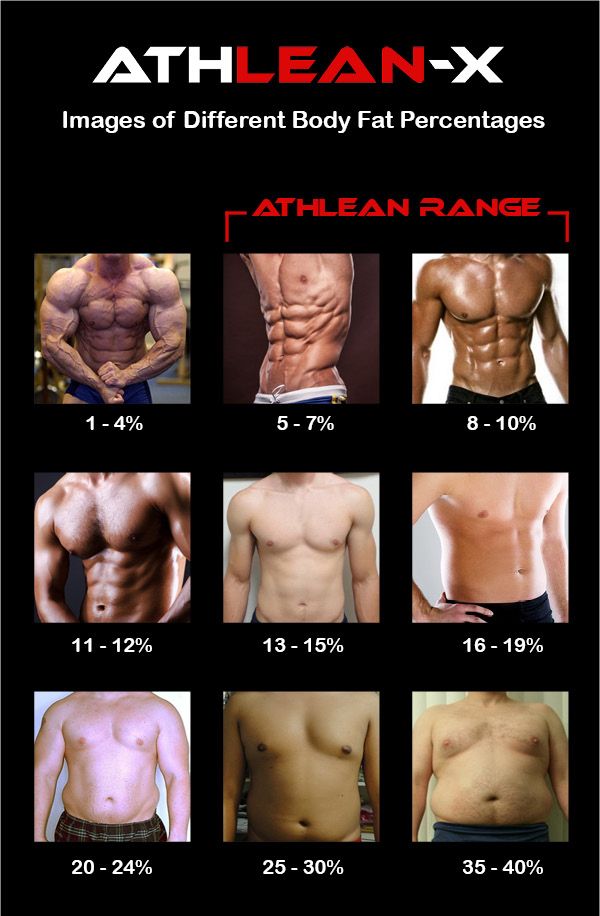
The first step is to estimate the daily energy expenditure. I recommend using Legion Athletics’ calculator https://legionathletics.com/tools/bmr-calculator/.  I prefer using the Katch-McArdle formula, listed under “BMR formula”, as this calculator uses your gender, weight, height, age, activity level, and body fat percentage to estimate your daily energy expenditure.  To determine your activity level, I only consider regular daily activity, like work.  I personally work a desk job, so I select “None (little to no physical activity)”.  However, someone who stands all day, like a cook, cashier, or nurse, would choose “A little activity”, someone who walks all day like a mail carrier or dog walker would choose “Some activity”, and someone working a labor-intensive job, like construction, would select either “A lot of activity” or “A TON of activity”.  Your body fat percentage can be estimated by using reference images like this one from Athlean-X, https://athleanx.com/wp-content/uploads/2013/05/Images-Photos-of-Different-Body-Fat-Percentages.jpg, or Legion Athletics, https://legionathletics.com/wp-content/uploads/2020/06/Female-Body-Fat-Percentage-Pictures.png.  These images are not the most precise estimates for body fat, but they are surprisingly accurate and the most efficient tool at doing so.  Using my information, the calculator estimates a basal metabolic rate of about 1600 calories and a daily energy expenditure of about 1850 calories.

The next step is to track daily exercise, in excess of the normal activity already accounted for.  I recommend using the app/website MyFitnessPal to track exercise and nutrition.  It isn’t perfect, but it is adequate.  Here, I track the type and duration of exercise, which for me is generally strength training, running, cycling, or hiking.  It should be noted that nearly every app, fitness watch, and fitness equipment will overestimate the energy expended.  To account for this, I always reduce the duration of exercise by about 25%.  Each morning, I input the amount of exercise that I anticipate performing.  This provides information about how much food I should be consuming.  After the workout or at the end of the day, I make the necessary corrections.

The last step is tracking daily energy intake.  Again, I recommend using the app/website MyFitnessPal to track exercise and nutrition.  I set the calorie target to match the amount estimated from the Legion Athletics energy expenditure calculator.  Each morning, I input the exercise that I anticipate performing, and the meals I anticipate consuming.  Throughout the day, I make corrections to my food diary and use the updated information like a guidance system for the rest of my food choices for the day.

Tracking calorie intake and calorie expenditure is the key task that will lead to weight maintenance, as well as weight loss or weight gain. However, the initial calorie goals are based on estimates that have to be corrected over time. This is accomplished by regularly measuring your weight and tracking averages. You can input the information onto MyFitnessPal, a spreadsheet like Excel, or another fitness app like GoogleFit, or Apple’s Fitness. I prefer using a spreadsheet. The overall trends in your weight will indicate whether your daily energy expenditure is actually higher or lower than the estimate.

For example, my weight is about 148 pounds. During my maintenance phase, I planned to keep my weight between 145 and 150 (148 +/- 2%). I was consuming about 1900 calories without exercise and about 2200 calories with exercise. Over the course of five weeks, my weight (7-day average) hit the lower bound of 145 pounds, so I re-evaluated my calorie expenditure and calorie intake. By increasing my calorie intake by about 100 calories, my weight leveled out at 147 pounds. I am currently 148 pounds again, and I am transitioning into a bulking phase.

Other resources:

YouTube Videos by Mike Israetel from Renaissance Periodization

Podcast by Nick and Lori Shaw, and Mel David from Renaissance Periodization

A Case for Strength: Losing Fat vs. Losing Weight

Have you ever wondered why some people are capable of losing weight and keeping the weight off, but other people rebound after losing weight?  After losing a significant amount of weight, some people may regain a portion of what they lost.  A few people may even rebound beyond their initial weight.  Perhaps, this has happened to you.

A common scenario that we all hear too often is that someone has an event coming up.  Perhaps a beach trip is around the corner, a wedding is coming up in a few months, or summer is approaching.  Regardless, we often want to look our best for these events, so we hunker down.  We give up eating out for a month; we cut out junk food; we lift at the gym every day after work; we eat a salad for lunch; we start intermittent fasting (aka skip breakfast) and do fasted cardio in the morning.  And we burn out and crash.

Frankly all of those techniques *CAN* be great ideas to lose weight, but if they contrast our lives too much, they may not be the right choice for us (yet).

Let’s use myself as an example now.  I am a graduate student that often spends a lot of time sitting at a desk in front of my laptop or textbooks.  I stand in my lab doing chemical research for hours on occasion.  I eat out for lunch at least twice a week when work gets busy.  I like to eat out for dinner about twice a week.  Sure, it may not be ideal, but it is my situation.

On the other hand, I am training for a marathon (only about two runs a week, as time permits), I like to powerlift (again I only train about twice a week, as time permits), I walk or bike to campus, and I cook about 17 of my 21 meals a week.  Doing so puts me at about 16% bodyfat, 142lbs, a BMI of 24.4, and about a daily intake of about 2100 calories.  Obviously, I am not the pinnacle of health, but I have found a decent middle ground.

If I wanted to lose weight:

There is only one way to do so: a calorie deficit.  This can be achieved through restricting calories and/or increasing energy expenditure. 

I can restrict my calorie intake to 1800 calories per day, by:

  • Eating more vegetables and/or more lean meat with each meal
  • Cutting out added oils and sugars (baking instead of frying, black coffee, less junk food)
  • Cooking my own meals 18 or 19 times a week

Eventually my body will reduce my metabolism (energy expenditure) and reach an equilibrium.

I can increase my energy expenditure by:

  • Running more often
  • Lifting more often
  • Walking more often (taking stairs, parking further away, taking walks, go hiking)

But again, eventually my energy expenditure will become more efficient, my metabolism will slow to reach an energy equilibrium, and my fitness progress will plateau.

Once again I’ll reach an equilibrium and plateau.  To prevent this, I have to further increase my energy expenditure or increase my calorie restriction.  If I cannot continue the calorie deficit, then I hit the familiar dead end.

An alternative is to lose bodyfat (percentage).  This can be achieved by maintaining a caloric intake, maintaining (or slightly increasing) energy expenditure, and, more importantly, increasing strength. 

Examples of this include:

  • Restricting calories to 2000 to 2200 calories (about my maintenance intake)
    • Eating more vegetables (for nutrients and filling)
    • Eat more meat (protein and healthy fats)
    • Cut out junk food
    • (note the only difference is that I am maintaining my weight)
  • Increase strength by progressively increase my workout load/intensity
    • Use a triple progression system
      1. First, increase the reps performed on the exercise
      2. Then, increase the sets performed on the exercise
      3. Finally, increase the weight used for the exercise
      4. Lastly, repeat steps 1 through 3
    • Eat enough protein to fuel the growth and development
      • Eat about 1 gram of protein per pound of lean body mass
      • If weight starts to increase, increase the amount of protein as well
      • Don’t worry about fats and carbs as they both mainly provide energy
    • Sleep enough to recover from the day’s work
  • Maintain energy expenditure
    • Continue running about twice a week
    • Continue walking to work/class

If I focus on strength training, my muscles will consume some of my daily calories (primarily from protein) to facilitate muscle growth.  This will increase my caloric consumption (in the short term).  Also, the increased muscle mass will increase my metabolic rate (in the long term).  In addition to sustaining my maintenance caloric intake, this induces a caloric deficit, leading to a small amount of fat loss.  If my fat mass is being reduced and my muscle mass is increasing, my total body weight may slightly change, but my body fat percentage will significantly decrease.

This method is more sustainable, as strength training is a scale-able method that does not require a dramatic increase in dedicated time.  Strength training only requires consistency and the application of effort.  The increasing metabolic rate allows for a scaling caloric intake.  This scaling intake provides for additional wiggle room to live life (aka eating out with friends and family, or celebrations).

What I am arguing here is that we do not need to make drastic changes to our lives to achieve our goals.  We just need to make small and sustainable changes. 

In my opinion, the addition of strength training is the essential step to a sustainable fitness journey, as it provides a method of scaling that is not limited to food restriction (like dieting) nor time (like cardio).

Where it began (running)

I started running in 2010, but my love for running began in 2014. In 2013, I had already ran about 30 or 35 5k races, mostly on trails. A friend and I decided to step outside of our comfort zone, and we registered for a local 15k trail race. It just happened to weave up and around the local ski slope. The race felt like hell, but I enjoyed it. Something about running through the fall foliage, feeling the crisp mountain air, and splashing in the mud of the creeks just felt right. My legs and my lungs may have been on fire, but experiencing the beautiful environment around me distracted me from the discomfort.

I caught the running bug.

After the race, I desired that exhilarating feeling again. We went on several trail runs, but they never quite felt the same. Perhaps it was the nerves leading up to the race and the atmosphere of having fellow runners around that I enjoyed. Perhaps it was unknowing whether or not I could even finish the race. Whatever it was, it led us to join a relay marathon. I would run the first two legs (15.4 miles) and he would finish the last two legs (10.9 miles) in the “Grand Canyon of the East”.

It was this race that I learned the true pain of running, but more importantly the intoxicating feeling of overcoming these struggles.

As a young adult or a grown child, I obviously bit off more than I could chew. Jumping from 3 mile races, to a 9 mile race, then a 15 mile race, all within 8 months is definitely doable. However, I would definitely recommend reaching the mileage before the race. With that being said, I obviously did not.

First mistake: I trained for the race primarily on the country roads that weaved around my town. Trail races require a higher degree of technical running, as the single-track trails have several small turns, obstacles likes roots and rocks, and quickly changing elevations. This all requires a higher degree of stability in the hips, knees, and ankles, and the road running did not replicate the the demands of the race for my muscles.

Second mistake: I only trained up to 12 miles for the 15.4 mile race. It’s a good idea to train up to the mileage of the race (assuming you’re running something smaller than a marathon). This is because there are a lot of little challenges to be solved that a runner should be aware of. The difference between a 12 mile road run and a 15 mile trail run was about 90 minutes of work, 1000-1900 calories**, and a load of electrolytes that need to be replenished. Primarily, I did not know how often I needed to refuel my body and the rate of electrolyte replenishment. This caused me to become extremely dehydrated despite being bloated with fluids.

Third mistake: I only ran in good weather. If I was planning on running three days a week, and it was raining the day of my run, I would defer it until the next day. Obviously the race isn’t going to wait just because of mildly inconvenient weather. However, the race day was perfect in terms of weather! But the few days beforehand were not. It poured for three days prior to the trail race, and the ground was completely saturated with water. The average height of mud on the course was about ankle high. Leading to the aid stations, the slopes were nightmarish, with calf-high mud, and thigh-high water (okay… I am short so maybe it wasn’t as impressive for the average person, but still today, in 2019, it is still regarded as the muddiest race in their 10 year history).

The result: The race went well through the first 10 miles. The rolling hills were beautiful. The air smelled like mud, budding trees, and blooming flowers. The views of the raging waterfalls were spectacular. But by mile 12, I was entering Hell. The end felt out of reach, as my legs felt like 20 pound weights had been added (probably because I actually had a few pounds of mud on my legs, and the mud suctioned my feet to the ground). But I had to finish my leg of the race; I had to finish so my partner could start his race. When mile 13 came, my entire lower body ached and burned. By mile 14, everything was cramping from the arch of my foot all the way up to the base of my head. I was collapsing into each step, as I dragged my body forward. Everything was telling me to stop, as I had half an hour before the cut off time, and with about another mile until the checkpoint, but my body wasn’t working. So I stopped. I stood there by a tree, as I depleted the remains of my water reservoir with my last gel pack. All while runners passed me, giving words of support. “Just one hill left.” “We’re almost to the checkpoint.” “We got this.” Frankly, I didn’t believe what they were saying, but I began to walk, as I had no other option. I took 10 steps at a time, as I slowly crept forward. I took 10 more steps, as that’s all it takes to build up the momentum again. 20 more steps, and I round the corner. In front of me stood the last muddy climb. I took 30 more steps, while thinking about my finish line. I was running again. Once the top of the hill was visible, my heart began to race. The cowbells at the line were ringing. A crowd was still cheering for us. I saw my friends, and they ran to the line as I finished.

“What the Hell happened?”

“I died. Everything cramped and I couldn’t walk.”

“Well, you made it; you finished.”

Although finishing the race was one of my greatest accomplishments, I was more proud that I overcame the voice in my head, as that voice screamed to stop. During the race, I ignored the voice that told me that I couldn’t do it. Like many nuisances, that voice slowly quieted when I ignored it; that voice eventually stopped, as I knew I could finish this race.

That day, I barely finished the race. It wasn’t the end of my journey but rather the start of my love. I told myself that eventually I’ll run the entire Sehgahunda Trail Marathon.

Meal Prep Ideas

(edited on the 7th of August)

Turkey Taco Bowl – 3 cup

— 1 cup – Rice (energy)
— 1 cup – Salsa (vegetables)
— 1 cup – Seasoned Ground Turkey (protein)

Chinese Stir Fry – 4 cup

— 2 cup – Rice or Sweet Potato (energy)
— 1 cup – Chinese Stir Fried Vegetables (vegetables)
— 1 cup – Chinese Marinated Chicken (protein)

American Stir Fry – 4 cup

— 2 cup – Rice or Sweet Potato (energy)
— 1 cup – American Stir Fried Vegetables (vegetables)
— 1 cup – Seasoned Chicken (protein)

Thai Stir Fry – 4 cup

— 2 cup – Rice (energy)
— 1 cup – Thai Flavored Vegetables (vegetables)
— 1 cup – Thai or Chinese Marinated Chicken (protein)

Chili Bowl – 3 cup

— 1 cup – Seasoned Beans (energy)
— 1 cup – Seasoned Vegetables (vegetables)
— 1 cup – Seasoned Ground Turkey (protein)

Recipes:

Who am I?

I ask myself, who am I, what do I want to do, and what do I care about, all the time. This probably isn’t uncommon or unique, as most of us probably are trying to seek greater understanding of the world and our lives. Anyways, I am Matthew, a current graduate student, furthering my education in engineering. I first started lifting in 2009 and studied fitness for fun since around 2012 [unfortunately, my genetics and eating habits restrict my “gains”, but I’ll talk about that later]. Also, I have been a “long distance” runner since 2010. Although, my love for running truly started in 2014.

So, if you’ve stumbled upon this blog, I assume you already have some answers for these questions. If you are a person on a fitness journey of self improvement, who strives to be healthier, and “enjoys” the work that we call exercise, this is a place for you.

This is a place that I will record my own thoughts and notes. I’ll post notes regarding: running, power lifting, mobility, recovery, nutrition, weight-gain, weight-loss, and other random thoughts. To be honest, this blog is simply to retain my thoughts and notes that I gather.

Design a site like this with WordPress.com
Get started